
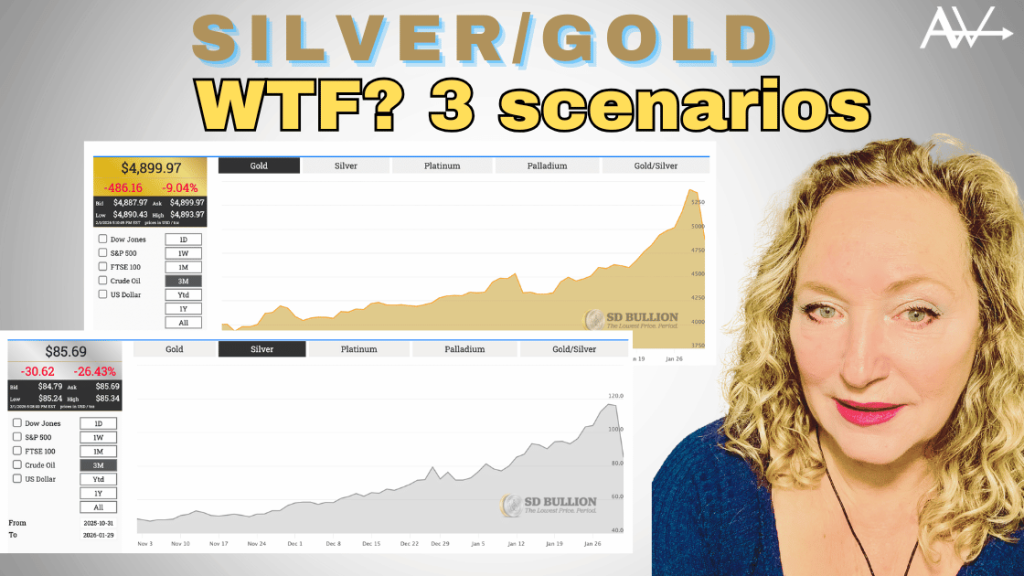
The precious metals market experienced an unprecedented shock on February 30th, marking what many analysts are calling the largest liquidity pump and crash in history. In a single trading session, gold and silver prices surged dramatically—only to collapse just as fast—leaving investors confused and searching for answers.
This article breaks down what really happened, examines the three dominant theories behind the move, and explains why physical precious metals continue to matter in times of extreme market volatility.
Precious Metals and the Largest Liquidity Event on Record
The February market action wasn’t ordinary volatility. According to multiple independent researchers, the precious metals market experienced:
- The largest liquidity injection ever recorded
- Immediately followed by the largest forced liquidation in history
This kind of price behavior is not typical of natural supply-and-demand movement. Instead, it points to deeper structural stress within global financial markets.
Precious Metals Theory #1: The Fed Chair Narrative
The first explanation pushed by mainstream media focused on politics.
According to this narrative, the announcement of a new Federal Reserve Chair nominee—seen as less aggressive with money printing—caused investors to suddenly abandon risk assets, including gold and silver.
The idea suggests:
- Investors felt “relieved”
- Precious metals were sold en masse
- The crash was a rational market response
However, this theory assumes a coordinated emotional reaction across global markets—something that rarely happens organically.
🔗 Source: https://www.federalreserve.gov
🔗 Source: https://www.cnbc.com/markets/
Precious Metals Theory #2: A Digital Attack on Exchanges
The second theory, popular in alternative research circles, claims a coordinated digital attack targeted metals exchanges such as COMEX.
This version suggests:
- Liquidity was drained from vaults
- Settlement books no longer matched
- Markets were temporarily destabilized
While dramatic, there has been no verified evidence confirming a successful large-scale theft of physical metals from exchange vaults.
🔗 Source: https://www.cmegroup.com
🔗 Source: https://www.lbma.org.uk
Precious Metals Theory #3: Institutional Liquidity Manipulation
The third theory—and the most plausible to many seasoned observers—points to institutional manipulation.
Under this scenario:
- Market insiders could see public long and short positions
- A forced liquidation was triggered at key levels
- Retail and paper traders were wiped out
- Institutions re-entered at significantly lower prices
This strategy aligns with historical precedent. Major banks, including JPMorgan, have previously faced fines for manipulating precious metals markets.
🔗 Source: https://www.justice.gov
🔗 Source: https://www.reuters.com
Why Precious Metals Cannot Truly “Crash”
Despite extreme short-term volatility, precious metals face a structural reality:
- Physical demand remains strong
- Supply shortages continue to worsen
- Industrial and monetary demand is rising
Unlike paper contracts, physical precious metals cannot be printed, rehypothecated endlessly, or settled digitally.
This is why paper traders suffered massive losses—while physical holders remain insulated.
Physical Precious Metals vs Paper Markets
The February event exposed a long-standing truth:
- Paper metals = leverage, counterparty risk, forced liquidation
- Physical metals = ownership, scarcity, real value
Constitutional U.S. silver (pre-1964 coins), physical bullion, and allocated holdings represent real money, not financial abstractions.
🔗 Source: https://www.usmint.gov
🔗 Source: https://www.worldgold.org
What Comes Next for Precious Metals
As Asian markets reopen and global liquidity tightens, volatility is expected to increase—not decrease.
Short-term price swings may continue, but the long-term trend remains tied to:
- Currency debasement
- Banking system stress
- Declining trust in financial intermediaries
Those holding physical assets are positioned far differently than those relying on paper exposure.
Final Thoughts: Staying Grounded in Real Value
Confusion in financial markets is rarely accidental. Multiple narratives often exist to distract, divide, and delay decision-making.
The simplest strategy remains unchanged:
- Avoid excessive leverage
- Reduce paper exposure
- Hold assets you can physically possess
In chaotic systems, real value always reasserts itself.