
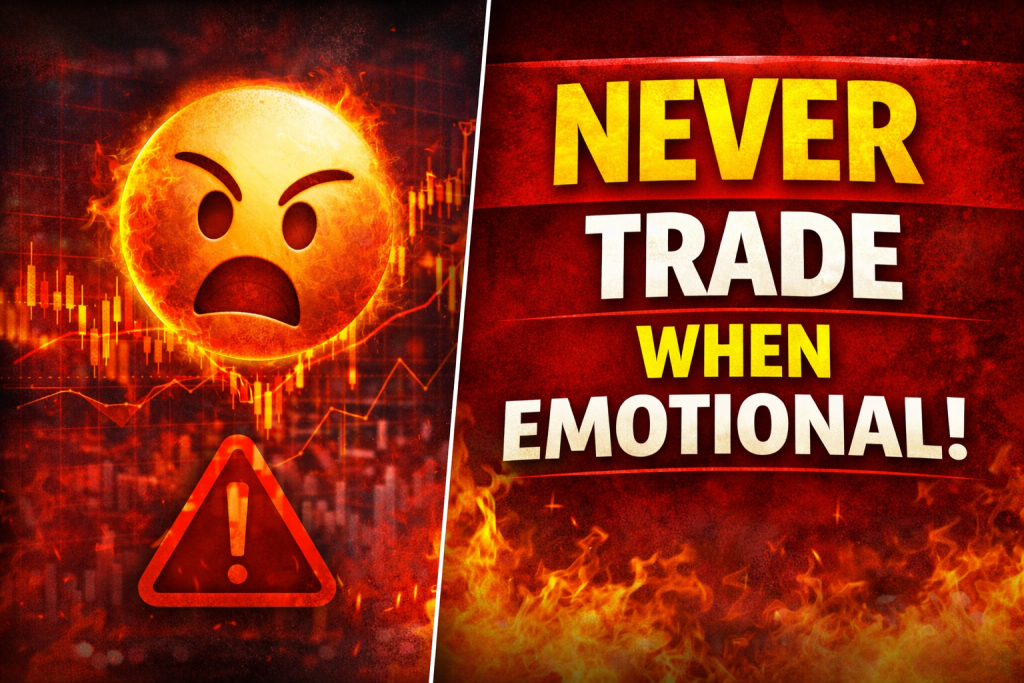
Emotional Trading is one of the fastest ways to lose money in volatile markets. When fear, stress, anger, or excitement take over, rational decision-making disappears. As current market conditions, geopolitical tensions, and sharp moves in silver and crypto intensify, emotional discipline has become more important than ever.
The biggest financial mistakes are rarely caused by lack of information—they are caused by emotional reactions.
Emotional Trading and Market Volatility
Periods of extreme volatility amplify Emotional Trading. Astrological cycles like Mars crossing the Sun often coincide with aggression, conflict, and impulsive behavior—not just in global events, but in personal decision-making as well.
This is when traders panic sell, chase tops, or overreact to headlines instead of sticking to strategy.
Learn more about how emotions impact investing:
Emotional Trading vs Strategic Thinking
The opposite of Emotional Trading is strategic thinking. The most successful investors approach markets like a chessboard, not a battlefield. They detach emotionally and view price movement as information, not a personal attack.
Major financial institutions have historically accumulated assets during chaos precisely because they remained calm while others panicked.
Emotional Trading and Silver Market Stress
Silver’s recent volatility has triggered strong emotional reactions—fear, greed, frustration, and urgency. Emotional Trading during these moments often leads to poor timing, overexposure, or complete withdrawal from opportunity.
Silver tends to expose unresolved emotional patterns, forcing traders to confront impatience and fear of loss.
For historical silver market behavior, visit:
Emotional Trading and Planetary Influence
Astrology shows that emotional intensity increases during certain planetary alignments. Venus aligning with the Sun can temporarily soften tensions, but when emotions are unresolved, they still influence decisions subconsciously.
This makes emotional self-regulation just as important as technical analysis.
Emotional Trading Is the Real Enemy
Markets do not punish people—Emotional Trading does. Your feelings can lie to you, convincing you to act when patience is required or freeze when action is necessary.
Key reminders:
- Feelings are not facts
- Volatility is not danger by default
- Calm thinking creates opportunity
- Emotional reactions create losses
How to Avoid Emotional Trading
To protect yourself from Emotional Trading, focus on:
- Pre-planned entry and exit levels
- Long-term perspective over short-term noise
- Reduced exposure during emotional stress
- Stepping away when emotions spike
For deeper insight into behavioral risk management:
Final Thoughts on Emotional Trading
Emotional Trading is not a market problem—it’s a mindset problem. In times of conflict, uncertainty, and rapid price movement, emotional control becomes the ultimate edge.
Those who master emotional discipline don’t just survive volatile markets—they thrive in them.